
Creating Your Charitable Giving Strategy: Insights from Philanthropic Expert Molly Judge
It’s the holiday season, which means many donors have charitable giving on their minds. And while this is a familiar topic for this time of year, it’s far from a typical moment for nonprofits. Many organizations are navigating public and private funding cuts even as the need for their services continues to rise.
Our clients regularly express feeling paralyzed by giving decisions in this moment. With multiple issues they care about — from climate, immigration, LGBTQ+ equality, food security, housing access —all facing significant headwinds, knowing where to focus feels more challenging than ever.
We know that giving can be both meaningful and, at times, perplexing — particularly now, when getting philanthropic dollars into community is so essential. That’s why we turned to a philanthropic expert to offer guidance on clarifying and simplifying your personal giving strategy for maximum impact.
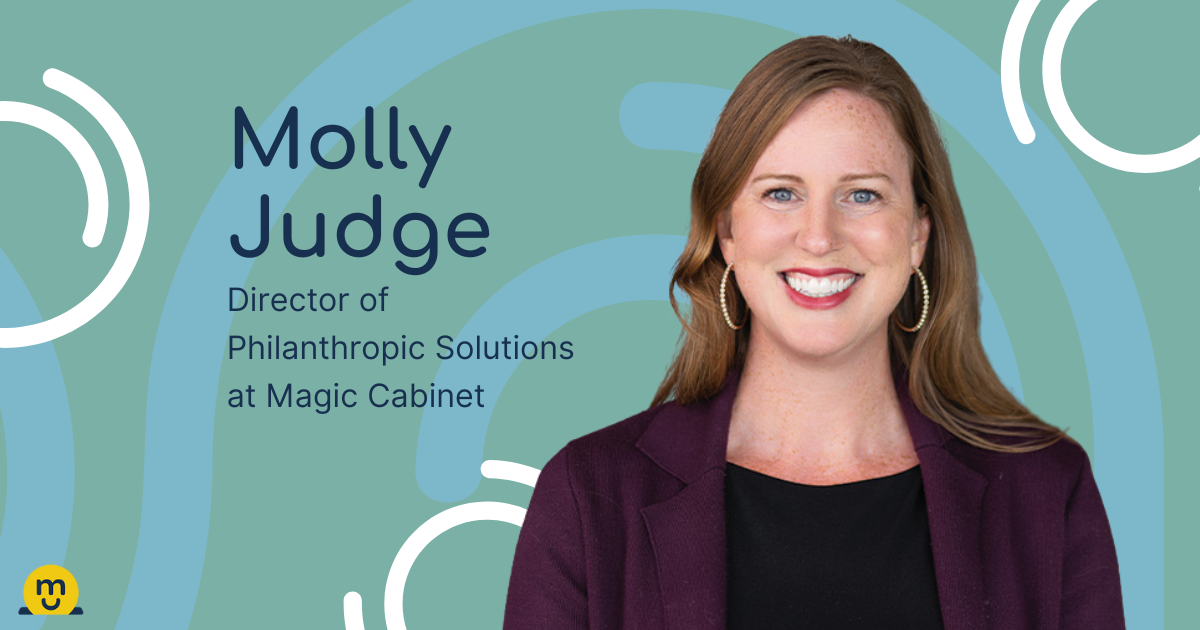
Molly Judge is the Director of Philanthropic Solutions at Magic Cabinet, a private foundation with a mission to shift philanthropy to center community. In collaboration with Humanize Wealth, Magic Cabinet is providing guidance to donors with the goal of making charitable giving more joyful and lasting.
Humanize Wealth and Magic Cabinet share core values, and our work is rooted in helping donors engage more thoughtfully with their giving in deep alignment with their vision and values. Want to learn more about crafting a charitable giving strategy? Molly shares what you need to know below.
Why do donors need a giving strategy? Can't they just donate to causes they care about?
A strategy, even a simple one, helps alleviate the overwhelm that can delay or stop your giving. There are many outstanding nonprofits providing essential support and filling critical gaps within their communities. Working with a professional to develop a strategy that aligns with your vision and values can help focus your giving and guide you toward organizations where you can make a big impact.
Where should someone start if they've never thought strategically about their giving before?
Think about the issues you read about in the news or discuss with your friends. Maybe you are already engaged in your community—do you volunteer locally, serve on a board, or provide input to city initiatives?
It’s also helpful to remember moments in your life where you’ve felt compelled to give or experienced the benefits of others' generosity. If you’re still stuck, try surveying friends and family. Sometimes an outside perspective can help you hone in on the values and issues that are important to you. And remember, there are no wrong answers, but there probably are a few right ones.
Once someone identifies their causes and budget, how do they choose specific organizations?
Several online tools are available to find organizations. One is Giving Compass, an online platform that offers access to resources and tools to help donors give more effectively, with functionality similar to ChatGPT.
If you’re interested in supporting nonprofits focused on specific issues, like housing insecurity, or a region, like the Puget Sound, you could consider supporting a community-advised fund, giving to an intermediary like Native Voices Rising, or joining a giving circle. These types of giving vehicles are often informed by communities and take the guesswork out of tracking the impact of your giving. In short, you can trust their decisions, so you don’t need to stress about your own.
Should donors concentrate their giving or diversify across different areas?
That’s really up to you! There is no wrong way to give. You may want to concentrate your giving to a specific community or issue and select 3-5 organizations to fund. Or if you want to focus on a few issues and invest in one or two organizations that focus on each of those areas, that’s also a good path. It may be tempting to give a small amount to several organizations, but larger, flexible donations are the most transformative for nonprofits.
What's the biggest mistake you see individual donors make?
That giving is something you can “fail” at. The way I see it, giving should be a confidence booster and maybe even bring you joy. You shouldn’t feel hamstrung by your decision to give, because ultimately your donation will reach organizations that will put it to good use.
The other thing I’ve noticed is that some donors give to an organization only on an annual basis. While this seems reasonable on the surface, it actually limits the impact of your donations. If you want to truly make a difference and you’re committed to an organization or issue, you should consider making a two- or three-year commitment, which gives nonprofits the runway to accomplish long-term goals.
For example, if you share that you’re planning to give to an organization longer-term, let’s say $5,000 annually for the next three years, that nonprofit has more confidence to pursue big ideas that will enable it to achieve its mission faster. If more donors adopted this strategy, we would see more nonprofit organizations flourish, and the impact would exponentially increase.
Any advice for donors who feel their contributions are too small to matter?
Many donors make small monthly donations, and contrary to popular belief, these contributions are stabilizing for nonprofits. Having a consistent and clear cash flow enables leadership to plan for near-term needs, including hiring full-time staff, adding technology tools, and streamlining internal systems.
What's one thing you wish every donor knew?
There are many ways to support nonprofits beyond cash donations. Your contributions of time, connections, and expertise expand the community of support for a nonprofit. Consider ways you can get involved beyond direct giving; this will benefit you and the communities you wish to support.
Part of my work at Magic Cabinet is partnering with organizations like Humanize Wealth to help donors address barriers to giving through a suite of custom solutions. Magic Cabinet has already supported donors with customized giving plans, opportunity research, and strategic analysis of their giving and goals. We know that giving might feel risky, but it doesn’t have to be—we’re here to partner and help you chart your own joyful path to impact. Let’s connect!
Key Takeaways
It’s important to develop a charitable giving strategy.
Get started by thinking about issues that are important to you or spaces in which you might already be engaged to develop a focus for your giving.
Try out an online tool, such as Giving Compass, to research organizations aligned with your focus areas. You can also consider giving vehicles like a community-advised fund, a giving circle, or donating directly to an intermediary organization.
Regardless of where you give, large, flexible donations are the most transformative for nonprofits.
Small, consistent, monthly donations are OK too.
Get involved beyond direct giving by contributing time, connections, and expertise to expand support for the organizations you care about.
Consider multi-year commitments. It helps nonprofits sustain and scale their work in the long term.
Giving doesn’t have to be stressful. It can be joyful and impactful with a solid strategy in place.
Giving Capacity - A Financial Planning Note from Leslie
If you are unsure about how much to budget for giving, a financial advisor can help you determine your “giving capacity” – how much you can sustainably give each year in the context of your overall financial planning goals. With the stock market up meaningfully over the past few years, many of our clients are finding that their giving capacity has increased, so revisit this budget each year. An advisor can also help you determine the best way to give – whether appreciated stock to a donor advised fund, or qualified charitable distributions from an IRA.
Many of our clients have separate giving buckets for political and advocacy work (501c4s) and mutual aid, so make sure to factor those into your giving budget – even if they aren’t deductible for tax purposes.
Other Humanize Wealth blog posts about charitable giving include Charitable Giving Through An Equity Lens and a primer on Donor Advised Funds.